
The year is 2026. While the world has undoubtedly evolved, one constant remains: the need for businesses to connect with their customers. And in this increasingly digital landscape, digital marketing isn’t just a trend; it’s the heartbeat of business growth.
So, what exactly is digital marketing in this not-so-distant future, and why does it matter more than ever?
What is Digital Marketing?
At its core, digital marketing encompasses all marketing efforts that utilize an electronic device or the internet. Think of it as a vast ecosystem of strategies and tactics designed to reach consumers where they spend an ever-increasing amount of their time: online.
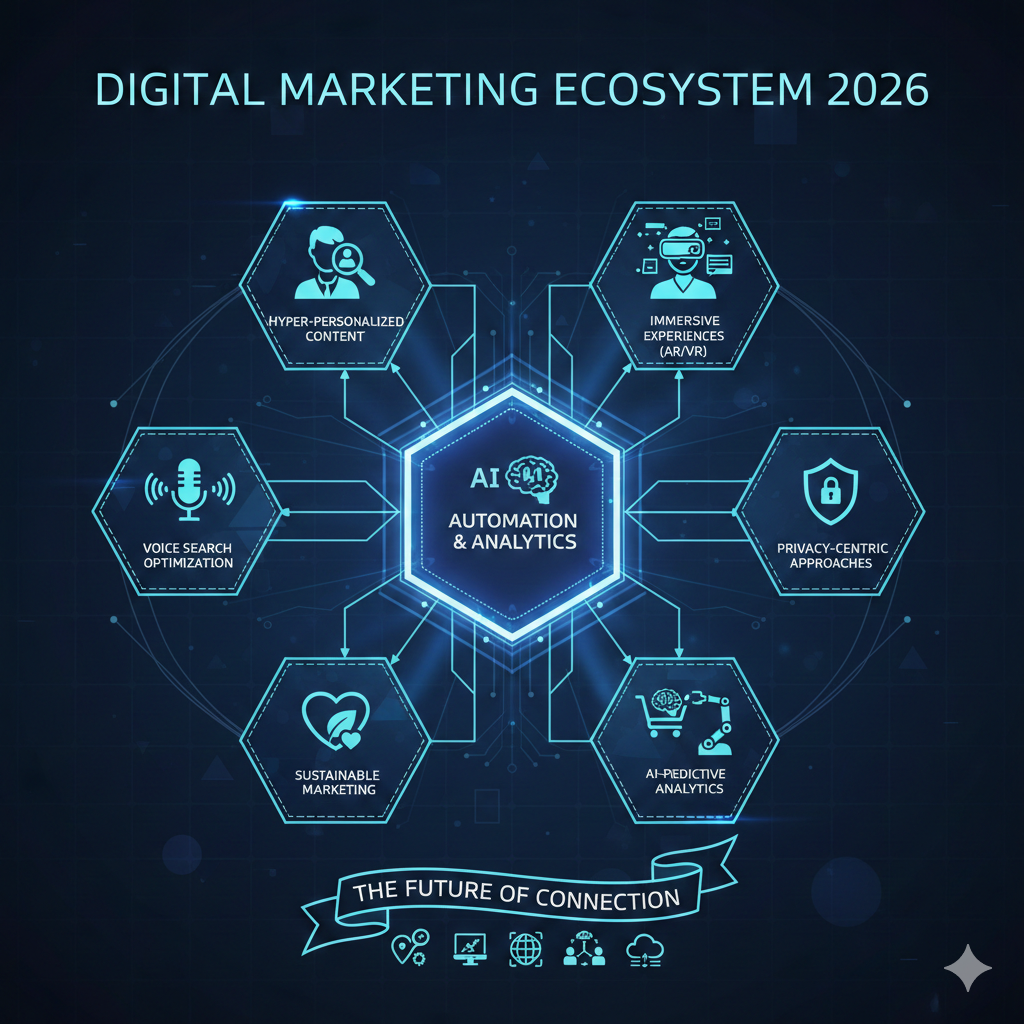
In 2026, this definition has expanded to include:
- Hyper-Personalized Content: Moving beyond basic segmentation, AI-driven algorithms craft content experiences unique to each individual user, anticipating their needs and desires.
- Immersive Experiences: Augmented Reality (AR) and Virtual Reality (VR) are no longer niche; they’re integrated into shopping, entertainment, and educational marketing campaigns, offering unparalleled engagement.
- Voice Search Optimization: With smart speakers and voice assistants becoming ubiquitous, optimizing for conversational queries is paramount for discoverability.
- Privacy-Centric Approaches: With stricter data regulations and a more privacy-aware consumer base, ethical data collection and transparent usage are fundamental.
- Sustainable Marketing: Consumers increasingly demand brand authenticity and commitment to environmental and social responsibility, reflected in marketing messages and practices.
- AI-Powered Automation & Analytics: AI drives everything from automated ad bidding and personalized email campaigns to predictive analytics that forecast market trends and consumer behavior.
Why Digital Marketing Matters in 2026
- The Dominance of Digital Touchpoints: From smart homes to wearable tech, almost every aspect of a consumer’s day has a digital touchpoint. Businesses must be present and engaging in these spaces to remain relevant.
- Unprecedented Personalization: Generic advertising is a relic of the past. Digital marketing in 2026 allows for a level of personalization that fosters genuine connections and drives significantly higher conversion rates. Customers expect experiences tailored specifically for them.
- Measurable ROI and Adaptability: Unlike traditional methods, digital marketing provides robust data and analytics. This allows businesses to precisely measure the return on investment (ROI) of their campaigns and adapt strategies in real-time for optimal performance.
- Global Reach, Local Impact: A small startup in one corner of the world can instantly reach a global audience, while simultaneously targeting hyper-local customers with incredible precision. This democratizes access to markets for businesses of all sizes.
- Building Brand Loyalty Through Engagement: Interactive content, community building on social platforms, and seamless customer service through AI chatbots all contribute to a richer brand experience, fostering deeper loyalty.
- Staying Ahead of the Curve (and Competitors): The digital landscape evolves at lightning speed. Businesses that fail to embrace and innovate within digital marketing risk being left behind by more agile and digitally-savvy competitors.
In 2026, digital marketing isn’t just a department; it’s a mindset that permeates every aspect of a successful business. It’s about understanding the evolving digital consumer, leveraging cutting-edge technology, and building authentic, lasting relationships in a world that’s more connected than ever before. If your business isn’t embracing it, you’re not just missing out; you’re becoming obsolete.