How Social Media Marketing Fuels Brand Growth in 2026
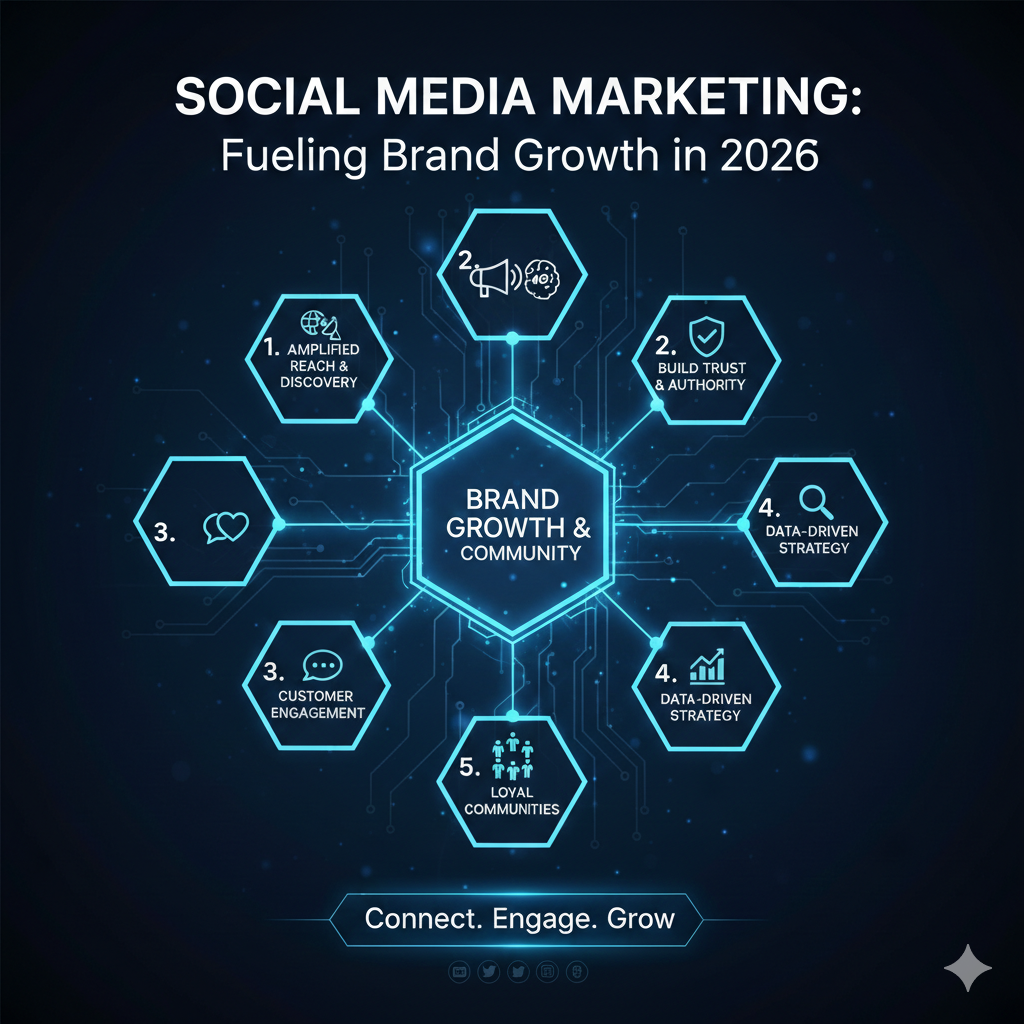
In 2026, social media is far more than just a place to share cat videos. It’s a dynamic ecosystem where brands are built, communities thrive, and businesses connect with their audiences on an unprecedented level. For any brand aiming for sustained growth, neglecting social media marketing is no longer an option—it’s a missed opportunity for explosive expansion. So, how exactly does social media marketing translate into tangible brand growth in this hyper-connected era? Let’s dive in. 1. Amplifying Brand Awareness and Reach Social media platforms are the modern-day town square, but with a global reach. Consistent, engaging content puts your brand in front of millions, expanding your potential customer base far beyond traditional channels. In 2026, this isn’t just about follower count; it’s about algorithmic reach, shareability, and appearing in curated feeds. It’s the digital equivalent of billboards everywhere, but with the ability to target exactly who drives by. 2. Cultivating Authentic Engagement and Community In an age of endless choices, consumers crave connection. Social media allows for direct, two-way communication, transforming passive audiences into active participants. When you respond to comments, run polls, host live Q&As, or encourage user-generated content, you’re not just marketing; you’re building a loyal community around your brand values. This engagement fosters a sense of belonging, making customers feel heard, valued, and genuinely connected to your brand’s story. 3. Driving Targeted Traffic and Lead Generation Social media platforms are highly sophisticated search engines in their own right. With advanced targeting options, you can reach incredibly specific demographics, interests, and behaviors. This precision means you’re not just casting a wide net; you’re attracting the right people who are most likely to be interested in your products or services. From clickable links in posts and stories to dedicated “Shop Now” buttons and lead generation forms, social media directly funnels interested prospects to your website, landing pages, or even direct messaging for sales conversations. 2. Cultivating Authentic Engagement and Community In an age of endless choices, consumers crave connection. Social media allows for direct, two-way communication, transforming passive audiences into active participants. When you respond to comments, run polls, host live Q&As, or encourage user-generated content, you’re not just marketing; you’re building a loyal community around your brand values. This engagement fosters a sense of belonging, making customers feel heard, valued, and genuinely connected to your brand’s story. 3. Driving Targeted Traffic and Lead Generation Social media platforms are highly sophisticated search engines in their own right. With advanced targeting options, you can reach incredibly specific demographics, interests, and behaviors. This precision means you’re not just casting a wide net; you’re attracting the right people who are most likely to be interested in your products or services. From clickable links in posts and stories to dedicated “Shop Now” buttons and lead generation forms, social media directly funnels interested prospects to your website, landing pages, or even direct messaging for sales conversations. 2. Cultivating Authentic Engagement and Community In an age of endless choices, consumers crave connection. Social media allows for direct, two-way communication, transforming passive audiences into active participants. When you respond to comments, run polls, host live Q&As, or encourage user-generated content, you’re not just marketing; you’re building a loyal community around your brand values. This engagement fosters a sense of belonging, making customers feel heard, valued, and genuinely connected to your brand’s story. 3. Driving Targeted Traffic and Lead Generation Social media platforms are highly sophisticated search engines in their own right. With advanced targeting options, you can reach incredibly specific demographics, interests, and behaviors. This precision means you’re not just casting a wide net; you’re attracting the right people who are most likely to be interested in your products or services. From clickable links in posts and stories to dedicated “Shop Now” buttons and lead generation forms, social media directly funnels interested prospects to your website, landing pages, or even direct messaging for sales conversations. 2. Cultivating Authentic Engagement and Community In an age of endless choices, consumers crave connection. Social media allows for direct, two-way communication, transforming passive audiences into active participants. When you respond to comments, run polls, host live Q&As, or encourage user-generated content, you’re not just marketing; you’re building a loyal community around your brand values. This engagement fosters a sense of belonging, making customers feel heard, valued, and genuinely connected to your brand’s story. 3. Driving Targeted Traffic and Lead Generation Social media platforms are highly sophisticated search engines in their own right. With advanced targeting options, you can reach incredibly specific demographics, interests, and behaviors. This precision means you’re not just casting a wide net; you’re attracting the right people who are most likely to be interested in your products or services. From clickable links in posts and stories to dedicated “Shop Now” buttons and lead generation forms, social media directly funnels interested prospects to your website, landing pages, or even direct messaging for sales conversations.
How Social Media Marketing Fuels Brand Growth in 2026 Read More »